

Transformation at Work
How classical music keeps changing shape

Since the beginning of the year, it feels like a lot has already happened. I’ve seen a few people talking about last year being the Year of the Snake in the Chinese calendar, a time of shedding and letting go, and this year moving into the Year of the Horse, all momentum and forward motion. Whether or not you read much into that kind of thing, it’s felt strangely accurate for me.
I’ve been thinking a lot this week about transformation. About how one thing becomes another. How we evolve rather than suddenly change. How development is often less about starting again and more about carrying something with us into the next phase.
Classical music has been doing exactly that forever. Composers build on what came before them. Themes get recycled, reshaped, pushed in new directions. Songs turn into symphonies. Folk music moves from fields to concert halls. Old styles resurface with new energy. Nothing really appears out of nowhere.
I’ve put together a short taster playlist to go with this, something to listen to alongside the first part of the newsletter. The full playlist opens up further down, once we’ve spent a bit of time with the music.
So this week’s music is about transformation in all its forms. Not reinvention for the sake of it, but evolution. Taking something familiar and seeing what else it can become.
Variations on a Theme by Paganini - Johannes Brahms
Niccolò Paganini is one of those rare classical music figures whose reputation escaped the concert hall and leaked into popular culture. He was the rock star violinist before that was a thing. The Pavarotti of the violin is actually a pretty good comparison.
The funny thing is that we have no real idea how he played. He died in 1840, so no recordings, no way of knowing his actual sound. What we do know is that he was considered otherworldly. His technique was outrageous, his control unbelievable, and his presence so intense that rumours followed him around his entire life. Some people genuinely thought he’d made a deal with the devil.
There’s a famous story that a wealthy patron once loaned the young Paganini a violin by the master luthier Giuseppe Guarneri. After hearing Paganini play, he refused to take it back. Paganini also owned several Stradivari instruments, among the most coveted violins ever made. Today they’re essentially priceless.
Paganini didn’t just play difficult music. He wrote it. If the standard repertoire wasn’t challenging enough, he raised the bar himself. His Caprices for solo violin are essentially technical obstacle courses, and No. 24 in particular has taken on a life of its own. Even if you don’t know it by name, I’d bet you recognise the tune within seconds.
Here, Itzhak Perlman gives Paganini a very good run for his money. It’s virtuosic, flashy, and unapologetically impressive.
That short theme ended up sparking the imagination of generations of composers. Liszt was one of the first, transcribing Paganini’s violin writing to the piano. But then Brahms came along and did something different.
Instead of showing off how fast or loud he could be, Brahms took that simple theme and pulled it apart. His Variations on a Theme by Paganini are short, punchy, and almost mischievous. Most last well under 2 minutes, some barely 30 seconds. They can feel like exercises, but there’s a sense that Brahms is enjoying himself enormously.
He enjoyed himself so much that he wrote two entire books of them. He also made it clear that they weren’t necessarily meant to be played as a single uninterrupted block. Pianists can pick and choose. Mix and match. Make their own version.
What Brahms does is give the pianist the chance to become Paganini. The same swagger, the same risk-taking, just transferred to the keyboard. That’s why I wanted to show you Evgeny Kissin tearing through the opening variations of Book 1, starting with the theme itself.
If you enjoy this, I really recommend listening to the full set. It becomes a sort of game, spotting the theme as it keeps resurfacing in disguise. A bit of showmanship, a bit of mental gymnastics. A very good Saturday morning puzzle.
Les Indes galantes - Jean Philippe Rameau
This French baroque opera dates from 1735, and it’s worth remembering what opera was back then. It wasn’t a quiet, reverent experience. It was social, noisy, and long. You went to see and be seen. You ate, you talked, you stayed for hours.
If there is a king of French baroque opera, it’s Jean-Philippe Rameau. What always surprises people is that he only turned seriously to opera in his 50s. Before that, he was mainly known as a music theorist and struggled to secure a stable job as an organist in Paris.
Les Indes galantes is a curious piece. It’s a ballet-opéra made up of four independent acts, each set in a different “exotic” location. Exotic, that is, by 18th-century French standards. Turkey, Peru, Persia, and North America all make an appearance.
One of the most famous moments is the Danse du grand calumet de la paix from the act titled Les Sauvages. The title alone tells you this comes with a lot of baggage. I won’t open the racism conversation here, but yes, it’s complicated and uncomfortable.
For a long time, this music was presented as elegant, decorative, and frankly quite polite. William Christie, who did more than almost anyone to revive French baroque music with his ensemble Les Arts Florissants, recorded this piece in 1991. It’s beautifully played, but by today’s standards, it sounds fairly tame.
One of the joys of baroque music is that we don’t actually know how it sounded. We have period instruments, treatises, and educated guesses, but no recordings. That gives performers an enormous amount of freedom.
Directors have taken that freedom and run with it. Baroque opera has probably inspired more bold, playful, and sometimes baffling productions than any other era.
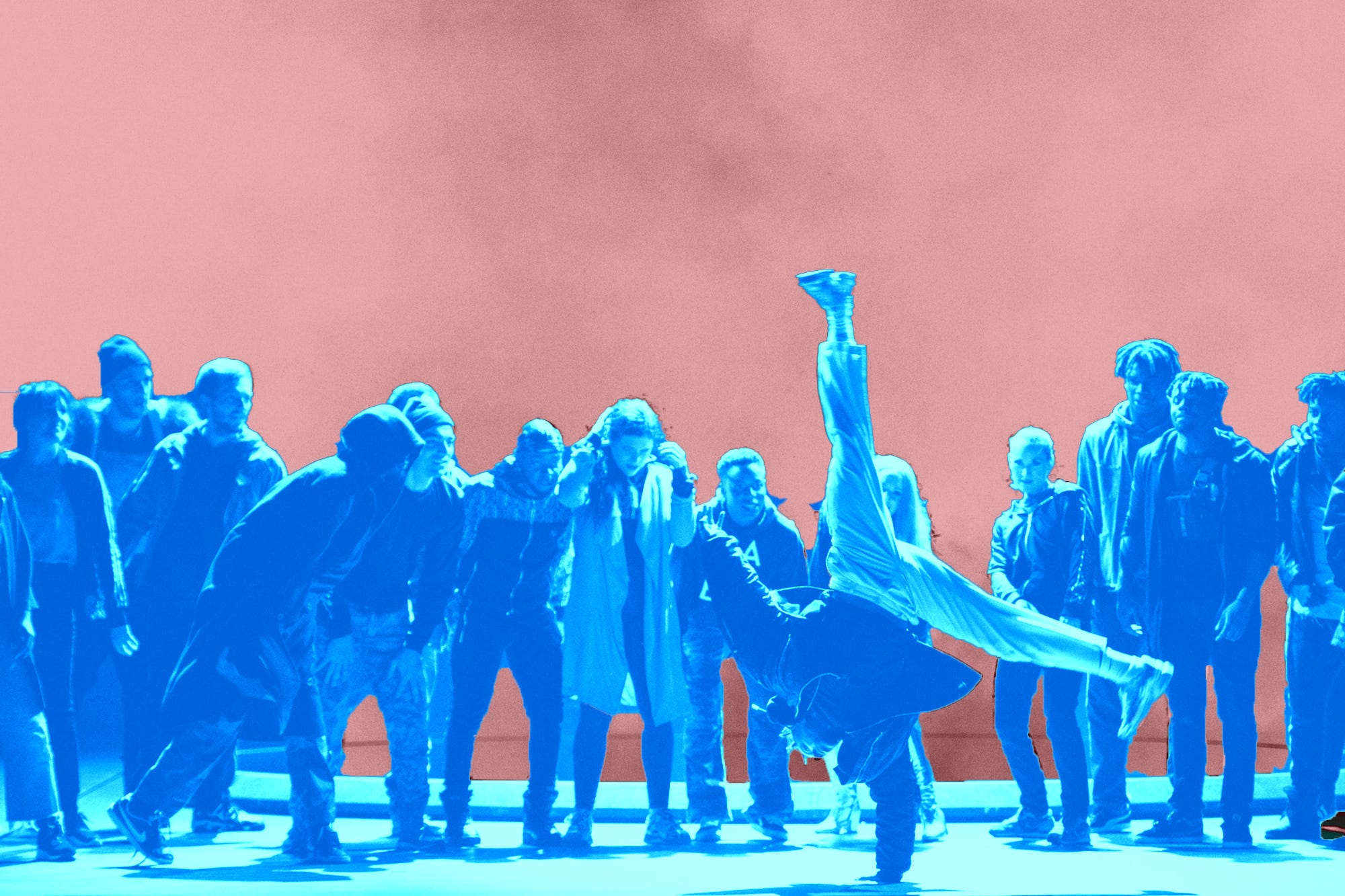
The 2019 production of Les Indes galantes at the Paris Opera is now something of a modern legend. Stage director Clément Cogitore and choreographer Bintou Dembele Cie Rualité brought in breakdancers and street dancers and completely reimagined the piece.
When I first saw it, I was honestly stunned by how well it worked. There’s nothing ‘exotic’ about this music in a musical sense. It’s pure French baroque. But somehow, the rhythms, the energy, the physicality of the dancing just fit.
This is transformation at its best. Not updating the music, but reframing it. Letting something written nearly 300 years ago speak directly to a modern audience. And judging by the applause at the end, the audience absolutely got it.
